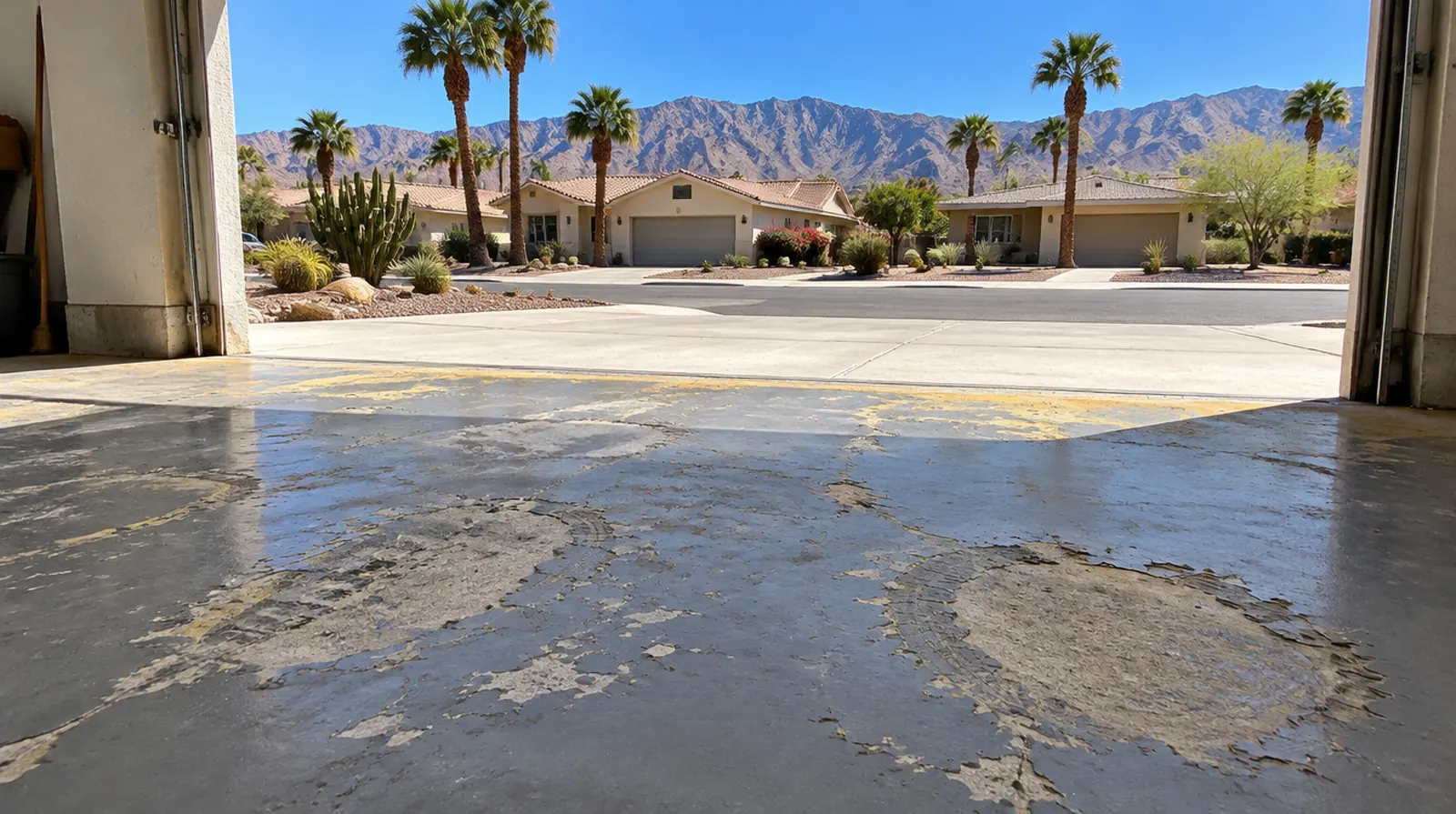
Why floors fail here
Hot tire pickup is the most common failure in the desert. A car parked after driving on scorching asphalt can lift thin coatings right off. UV light yellows standard epoxy near the door. Poor prep, such as skipping grinding, means the coating never bonded well. Moisture from irrigation or a high water table can also push coatings up from below.
Our repair process
Diagnosis
We inspect, test adhesion and check moisture. You get a clear recommendation for spot repair or full replacement.
Spot repairs
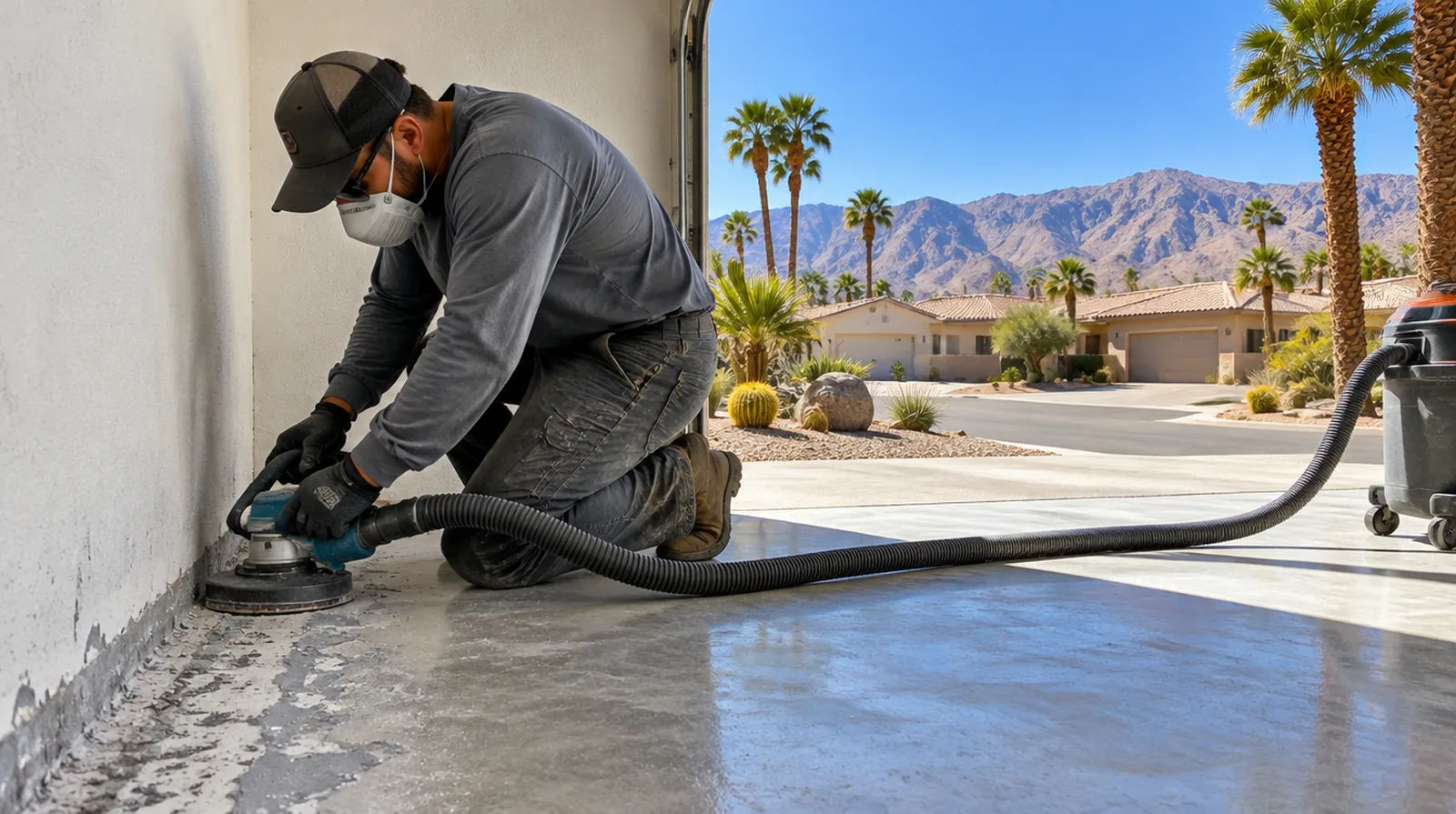
Small peeling areas, chips and scratches are ground out, filled and recoated. Flake floors get matching chips.
Full replacement
When adhesion has failed widely, we remove the old coating, fix the cause and install a heat-tolerant system.
Yellowing and fading
Yellowed epoxy can be sanded and topcoated with a UV-stable polyaspartic finish that stays clear in the sun.
Cracks
Slabs crack from settling and temperature swings. We fill cracks with rigid or flexible materials and grind them smooth.
Questions
Can you match my color?
Usually close, and a full topcoat blends the repair.
Why did my floor peel?
Often hot tires on a thin or poorly bonded coating.
Will repairs last?
Yes, when the cause is fixed.
Floor peeling? Send photos and book a visit.
DIY kit failures
Many failing floors we see started as weekend DIY projects. Kits often skip grinding and use thin water-based epoxy that cannot handle desert heat. We grind everything off and start fresh with professional materials, so your second floor lasts.
Rental and vacation properties
Property managers need repairs done quickly between guests. We schedule fast-cure repairs that let garages return to use within a day.
Sending photos
Share wide shots and close-ups with a coin for scale. Include any product info. This helps us advise before visiting.
Preventing future damage
Hot tire mats, jack pads and prompt cleanup of chemicals extend floor life. We share a care sheet after every repair.
Recoats
Well-bonded but worn floors can be scuffed and recoated in a day, restoring shine and protection.
Sun damage near the door
The first few feet inside the garage door get the most sun. Standard epoxy there often turns amber while the back of the garage stays gray, creating a two-tone floor. Repairing that area alone rarely matches, so we usually sand the whole floor and apply a fresh UV-stable topcoat. The result is an even color from front to back that stays consistent.
Repairs after plumbing work
Slab leaks are common in older desert homes, and plumbers sometimes cut trenches through garage floors to reroute pipes. After the concrete is patched, the coating needs to be rebuilt. We grind the patch flush, prime it and blend new coating into the existing floor. For flake floors we use matching chips so the repair is hard to spot.
Commercial repairs
Shops and restaurants with damaged floors around drains or under equipment can be repaired overnight with fast-cure materials, keeping business running.
Bubbles and pinholes
Bubbles that appear right after installation usually come from coating applied in direct sun or on a hot slab. Air in the concrete expands and rises through the wet resin. These defects are cosmetic at first but can become weak points. We sand the area, fill pinholes with a scratch coat and reapply topcoat during cooler hours so the problem does not repeat.
Repair or replace?
We give both options side by side with cost and expected lifespan. Sometimes a partial repair is best for a home being sold soon, while a full replacement makes sense for a long-term owner.
Edge chipping at the door
The leading edge of the slab under the garage door often chips where the door seal meets concrete. We rebuild this edge with epoxy mortar and a fresh coat, keeping water and sand from creeping under the coating and starting a new peel.
Most spot repairs are completed in one visit.
Get your floor repaired
Call (000) 000-0000 for a free estimate.