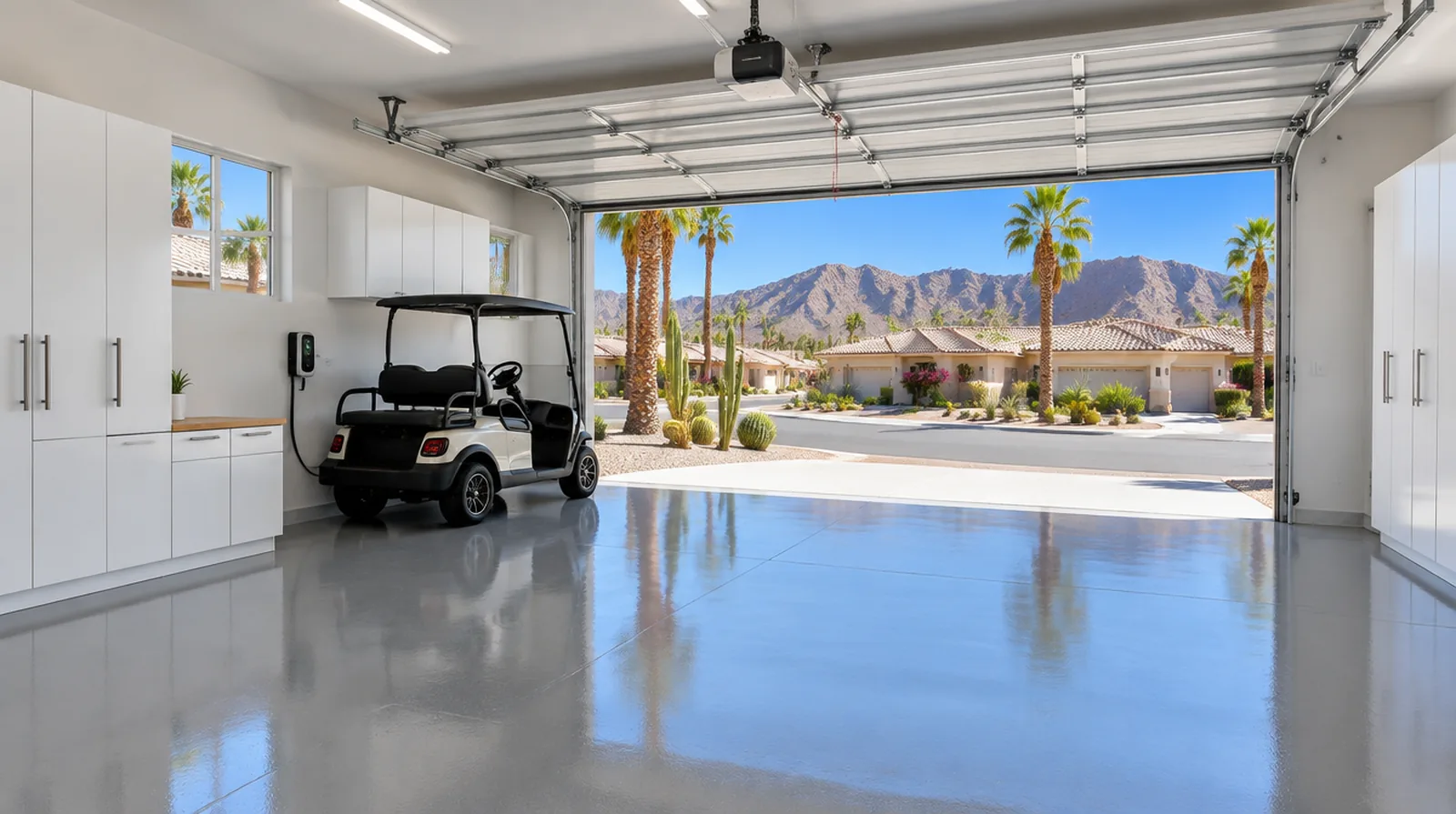
Why desert garages fail
The most common call we get is from a homeowner whose garage floor is peeling only a year or two after it was coated. Nearly every time, the culprit is a thin product rolled over unground concrete. In mild climates those floors sometimes survive. Here, hot tires grab the softened coating and lift it off in patches that match the tread. Sun pouring through the open door turns cheap epoxy yellow. Sand tracked in by the wind scuffs the surface dull. A durable floor starts with mechanical grinding and a system rated for heat.
Our process
Inspection and testing
We check moisture, test for sealers and look for oil stains, cracks and old paint. Many newer homes have slick, hard-troweled slabs that need aggressive grinding to bond. Older cove homes may have stained, dusty concrete that needs deeper cleaning.
Diamond grinding
We grind the entire floor with vacuum-connected machines, then hand-grind edges and around the water heater. Grinding opens the pores so the primer bites into the slab.
Repairs
Cracks are filled with rigid epoxy or flexible polyurea depending on movement. Spalled areas near the door are rebuilt with epoxy mortar.
Coating
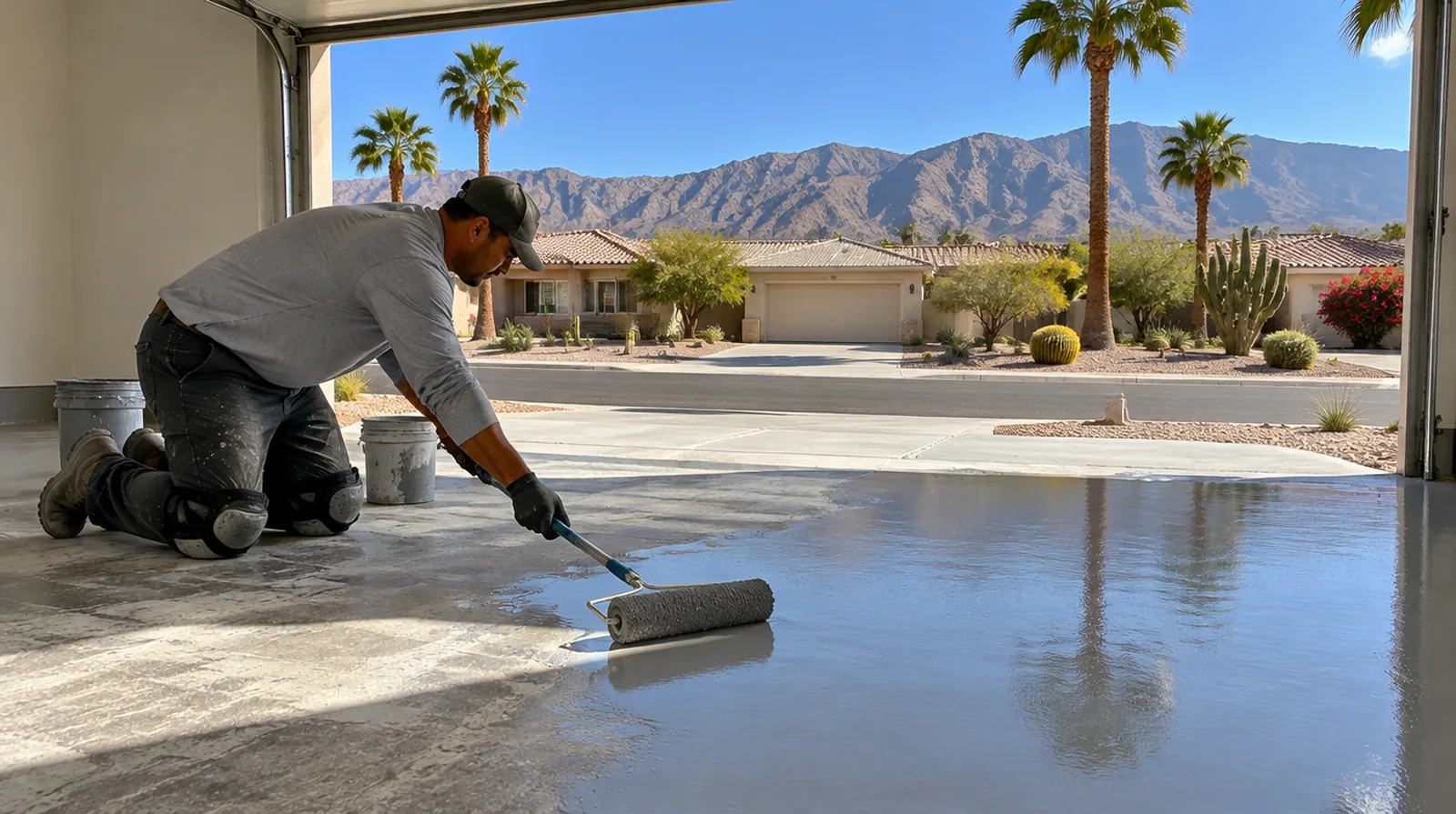
We apply a penetrating base, add color or flakes, then finish with a UV-stable topcoat that resists yellowing and heat. In hot months we work in the cool morning hours.
Choosing a finish
Solid colors look clean and modern. Light gray reflects light and stays cooler under bare feet, which matters when the garage reaches triple digits. Tan and sand tones blend with desert stucco and hide dust. Flake blends add texture and hide imperfections. We bring samples and look at them in your garage light, since the harsh sun outside makes colors look different than they do on a showroom wall.
Texture and safety
Many owners in town are retirees, and safety matters. A slight texture added to the topcoat keeps the floor from getting slippery when water drips from a car, a cart or a pool towel. We can add more grip near steps into the house and less in work areas where you roll a creeper.
Caring for the floor
Sweep or blow out sand weekly. Mop with a pH-neutral cleaner. Wipe oil and battery drips promptly. Place pads under kickstands and jack stands. Avoid dragging sharp metal. With this routine, the floor keeps its look for many years.
Questions
Can you coat over old paint?
No. We grind it off first so the new coating bonds to clean concrete.
How soon can I park?
Usually two to three days for epoxy, about a day for polyaspartic.
Does a coated floor get hot?
Lighter colors stay cooler; we help you pick shades for comfort.
Ready for a tougher garage floor? Book a free estimate.
Workshops and hobby garages
Woodworkers, car restorers and hobbyists use garages as shops, especially in the cooler months. Solvents, sawdust and dropped tools are hard on floors. A thick, chemical-resistant epoxy with a light color brightens the space and makes spotting small parts easier. We can add striping to mark work zones or cart parking.
Laundry corners and storage
Many desert homes put the washer, dryer and a spare freezer in the garage. Leaks from hoses and condensation can stain concrete and damage stored boxes. A seamless coating keeps water on the surface so it can be wiped up, and coving at the wall protects drywall from mop splash.
Garage conversions
Some owners convert part of a garage into a gym or casita. A coating can transition from the parking area to the converted space, with a smoother finish indoors and texture where cars park.
Cooling the garage
Plenty of owners add insulated doors, mini-split units or evaporative coolers to make the garage usable year round. Once the space is comfortable, a finished floor completes the upgrade. Bright gray or beige surfaces bounce light from a single fixture across the whole room, cutting the need for extra lamps while you work on a project after sunset.
Get a garage floor estimate
Call (000) 000-0000 for a free estimate.